

De Bry Rare Books
1782 "Real Ordenanza de Intendentes" from the library of a Manila convent. Bound with three Manila manuscripts by González de Carvajal –Intendente de Guerra y Real Hacienda de Filipinas
1782 "Real Ordenanza de Intendentes" from the library of a Manila convent. Bound with three Manila manuscripts by González de Carvajal –Intendente de Guerra y Real Hacienda de Filipinas
Couldn't load pickup availability
1782 "Real Ordenanza de Intendentes" from the library of a Manila convent. Bound with three Manila manuscripts by González de Carvajal –Intendente de Guerra y Real Hacienda de Filipinas
Madrid: Imprenta Real, 1782.
Folio (29.6 × 20.5 cm). [62], 326, [140], [24] pp. Contemporary limp vellum with manuscript spine-title. Scattered worming and old repairs.
The 1782 Real Ordenanza de Intendentes initiated the intendencia system of reform in the Spanish colonies, reorganising administration and finance across the Americas and Pacific.
This copy comes from the Convent of San Nicolás de Tolenito in Manila, and is bound with three original Manila manuscripts (1785–1787) relating to the enforcement of these ordinances in the Philippines. Two are signed “Gonzalez” and one by Ciriaco González de Carvajal.
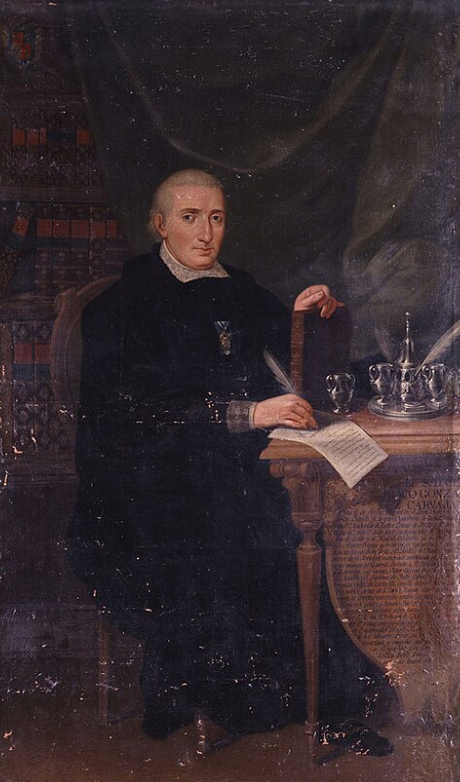
Ciriaco González de Carvajal (1745 – c1828) (see attached portrait) was a prominent Spanish jurist and colonial reformer. Born in Seville, he studied law at Granada and was appointed Oidor of the Real Audiencia de Manila in 1777. He later became Intendente de Guerra y Real Hacienda (1786), implementing these Real Ordenanza de Intendentes locally. Carvajal directed the Sociedad Económica de Amigos del País of Manila (founded 1781) and helped translate Bourbon fiscal and bureaucratic reforms into the Pacific context. His surviving Manila-signed manuscripts demonstrate the early extension of the intendencia model to the Philippines.
The 1782 Real Ordenanza de Intendentes introduced sweeping Bourbon reforms across the Spanish Empire. They replaced outdated and fragmented colonial administration with a centralised system of intendencias under direct royal authority. Designed to centralise power, curb corruption, and improve tax efficiency, it unified monetary, judicial, and military functions. In Manila, officials such as Ciriaco González de Carvajal implemented these reforms, aligning the Philippines with the broader imperial programme of revision.
A fine Manila-provenance copy linking the imperial reforms of Charles III to their local Philippine application, through Carvajal — one of the key figures in late 18th-century colonial administration.