
De Bry Rare Books
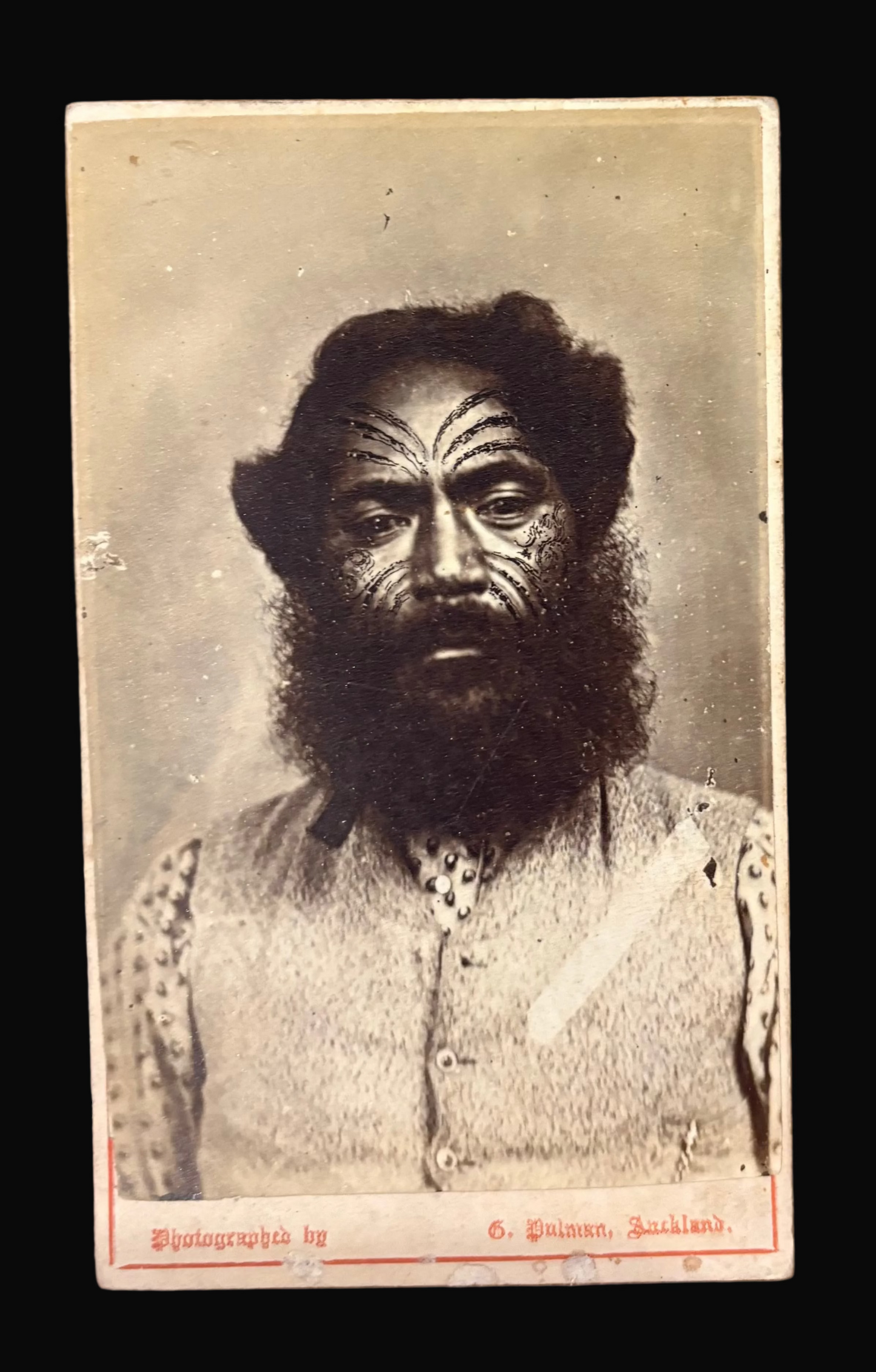
Carte de Visite of the Māori Rangatira (chief) Hōri Ngākapa te Whanaunga by George and Elizabeth Pulman
Carte de Visite of the Māori Rangatira (chief) Hōri Ngākapa te Whanaunga by George and Elizabeth Pulman
Couldn't load pickup availability
c. 1867-71 Carte de Visite of the Māori Rangatira (chief) Hōri Ngākapa te Whanaunga from the studio of George and Elizabeth Pulman
-Hōri Ngākapa Te Whanaunga depicted with his moko kanohi (facial tattoo) in European dress
-Original Carte de Visite from the studio of George and Elizabeth Pulman in Auckland
-Auckland, c. 1867-71
Hōri Ngākapa Te Whanaunga (born c.1826) was a prominent nineteenth-century Māori chief (rangatira) of the Hauraki region, associated with Ngāti Whanaunga, Ngāti Maru and Ngāti Pāoa.
During the New Zealand Wars Hōri supported the Kīngitanga, or Māori King movement, fighting against British and colonial forces. He took part in the Māori defence of Rangiriri, escaping capture by swimming across the neighbouring lake Waikare. His wife, Hera Puna, also accompanied him during the fighting and was remembered for saving his life during a skirmish by shielding him while he reloaded his gun.
After the wars, Ngākapa returned to Hauraki and became an important intermediary during a period of reconciliation between Māori and the colonial government. In particular, he was active in negotiations surrounding the opening of the region’s rich goldfields.
His contemporary importance is demonstrated by his being painted in 1878 by Gottfried Lindauer, while his wife was painted by Charles Frederick Goldie.
The photograph is from the Studio of George and Elizabeth Pulman. The Pulmans operated the well-known Pulman photographic studio, which produced an important series of portraits of Māori rangatira from 1867-c. 1900. George Pulman passed in 1871, suggesting this print (labelled G Pulman) was produced from 1867-1871. Elizabeth continued the business after his death.
Reference: an example is held by Te Papa - registration O.039538