

De Bry Rare Books
First English Edition of Nathaniel Hodges’ Eyewitness Account of the 1665 Plague – With Folding Mortality Table
First English Edition of Nathaniel Hodges’ Eyewitness Account of the 1665 Plague – With Folding Mortality Table
Couldn't load pickup availability
With a folding Mortality Table of the 1665 London Plague
“Loimologia: Or, an Historical Account of the Plague in London in 1665”
-By Nathaniel Hodges (1629–1688), with an additional essay by John Quincy.
-8vo.
-First English edition
-Complete with the folding table recording the mortality of the London parishes during the Great Plague.
-Text on Page 12 consistent with the First edition reading “Eight Persons cut off”. This error was corrected to “Eight Thousand Persons cut off” in the second edition, also issued in 1720.
-Translated from Hodges’ Latin Loimologia, first published in 1672.
-Printed in London for E. Bell and J. Osborn, 1720
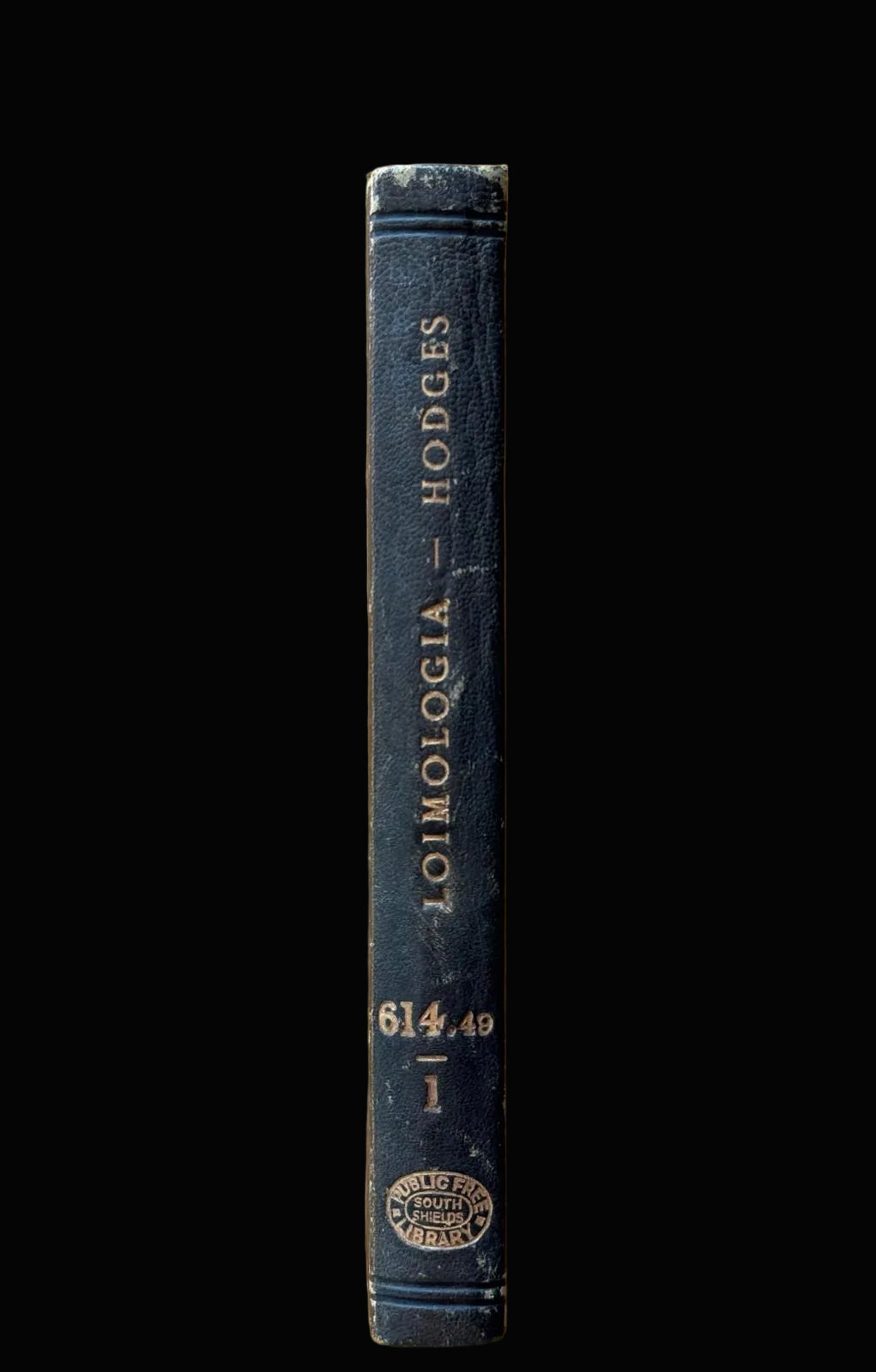
-Ex Libris South Shields Master Mariner's Asylum. Modern binding.
This is the first English edition of one of the most important contemporary medical works recording the Great Plague of London. The work is an eyewitness account of the plague written by Nathaniel Hodges (1629–1688), a physician and Fellow of the Royal College of Physicians. While many wealthy inhabitants and physicians fled the capital, Hodges remained at his home in Walbrook (London) and continued to treat the sick at the height of the epidemic.
Of particular interest in this work is the large folding mortality table, recording deaths across the individual London parishes during 1665. It shows the extremely high toll of the plague, with 68,596 of the total of 97,306 burials in London during the year attributed to plague.
Drawing upon his experiences, Hodges produced a detailed account of the symptoms, natural history, and treatment of the plague. He also discussed theories of its transmission, and the measures used to control it.
Originally published in Latin in 1672 as Loimologia, sive Pestis nuperae, this first English translation appeared in 1720. In 1720, plague had again become a threat to London following a devastating outbreak in Marseille, with renewed fear that plague might cross the Channel. This created a market for an English translation of Hodges’ account, nearly 50 years after it had first appeared in Latin.
Hodges’ Loimologia would become an important source for Daniel Defoe’s A Journal of the Plague Year, published in 1722. This English edition also contains John Quincy’s essay on the causes and contagious nature of pestilential diseases, addressing “the Infection now in France”.