

De Bry Rare Books
With contemporary Urdu inscriptions by an English reader - "The Tale of the Four Durwesh" - Meer Amman Dihlavi - Calcutta 1845
With contemporary Urdu inscriptions by an English reader - "The Tale of the Four Durwesh" - Meer Amman Dihlavi - Calcutta 1845
Couldn't load pickup availability
With contemporary Urdu inscriptions by an English reader
"The Tale of the Four Durwesh. Translated from the Oordoo Tongue of Meer Ummun of Dhailee
By Dr Lewis Ferdinand Smith, Late secretary of His Majesty's embassy to the Court of Persia"
-Printed in Calcutta - Sold at the New China Bazar Library, No 31.
-1845
-Complete: TP, [1], iv, xi, 260, [1]
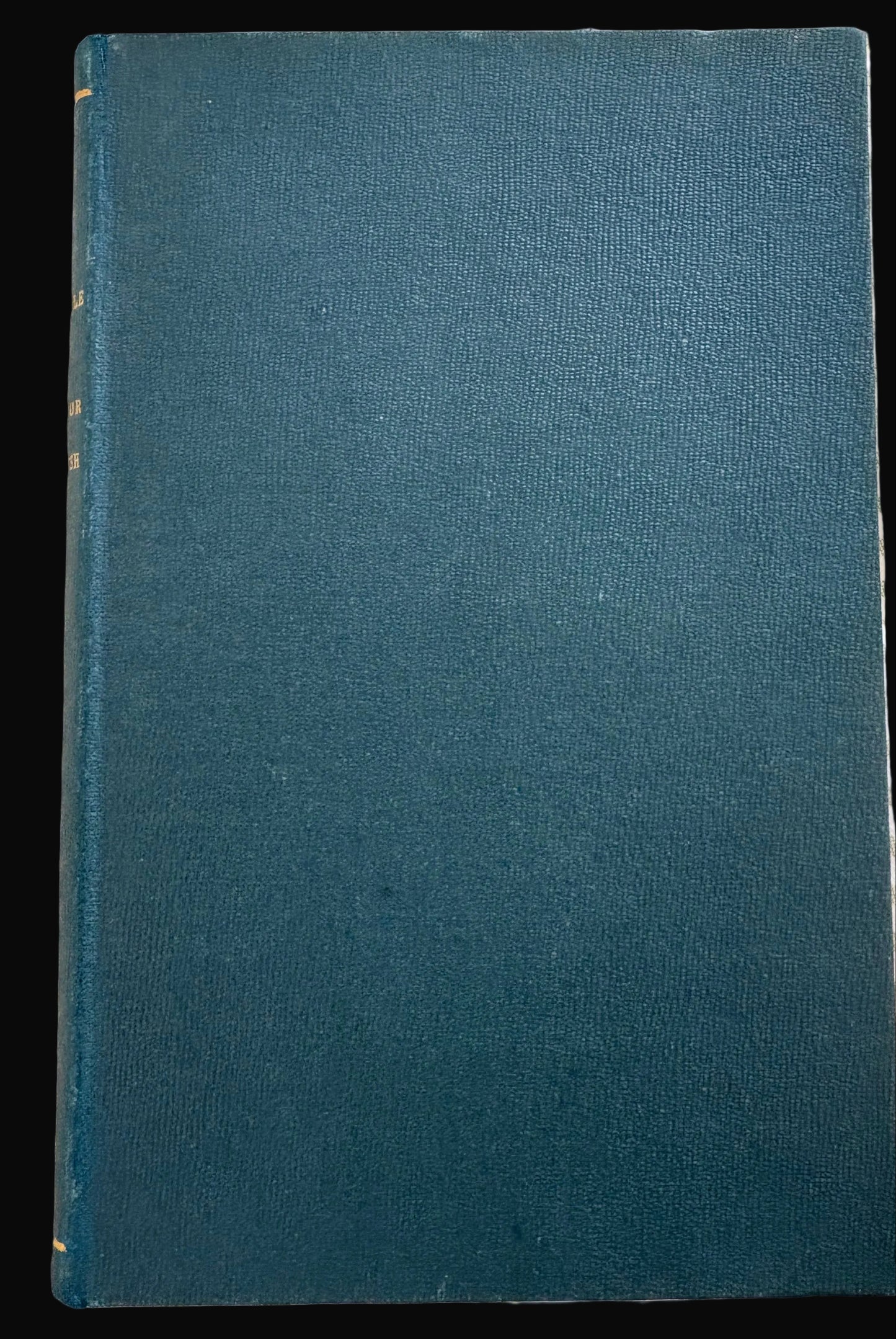
-Bound in 20th Century blue Buckram. Some mild stains and small marks but otherwise near fine condition. Some marks to upper and lower spine.
-By Meer Ummun (Meer Amman Dihlavi)
-With a few contemporary annotations to text and an Urdu vocabulary on the last page
The Tale of the Four Durwesh is an English translation of a celebrated Urdu work by Meer Amman of Delhi. Based on the older Persian classic "Qissa-e Chahar Darvesh", this work tells tales of adventure, romance and wandering dervishes. Meer Amman's "Bagh o Buhar" is considered a classic in early Urdu prose, departing from the more formal Persian literary style which preceded it.
In this edition, Smith supplemented the prose with a summary of Indian customs and ideas for English readers. The text was often used to teach Urdu to members of the East India Company. Particularly interesting in the present copy are the contemporary Urdu manuscript notes and vocabulary exercises, apparently added by an English reader learning the language in India, preserving evidence of the practical use for which such works were often intended.
Meer Amman’s "Bagh o Buhar" first appeared in Calcutta in 1804 under the supervision of John Gilchrist at Fort William College and became one of the most influential texts in the development and teaching of modern Urdu. Later editions were published in 1813 (the first with Smith's commentary), 1825 and 1842. All these editions are uncommon with five copies of the 1813 edition, two of the 1825, and two of the 1842 edition recorded on OCLC.
This edition is scarce with only 5 other copies on OCLC (1190977056).